

Most pet owners admit it quietly. They mean to be prepared. They mean to keep emergency tools handy. But the days blur, routines take over, and one tiny detail keeps slipping through the cracks. Until something happens. A cut paw. A swallowed object. A sudden fever. A reaction to a bug bite. And just like that, panic hits.
That feeling? It’s exactly why having your own set of emergency pet supplies matters. Pets can’t tell us what hurts. They can’t say “I need help.” They rely on us completely. A little preparation turns fear into action. Instead of rushing around the house looking for random things, you grab one kit. One bag. Your calm returns. Your pet feels safer. You feel in control again.
A pet first aid kit isn’t just a box filled with items. It’s a lifeline. It helps you act fast before you reach the vet. Think of it as your emergency toolkit for unexpected situations. Cuts during a walk. Burns from touching something hot. Allergic reactions. Strange vomiting. Accidental choking. These things happen more often than we expect.
A proper kit includes tools for cleaning wounds, managing pain until help arrives, preventing infection, and keeping your pet stable. It’s not meant to replace a vet visit. It’s meant to bridge the moments between the incident and professional help. And in many cases, that short window makes a real difference.
A good kit works for both dogs and cats. Whether you’re building a cat first aid kit or one meant for your large dog, the basics stay the same. Here’s what pet owners usually keep inside:
These are your core dog first aid essentials, but feel free to personalise your kit based on your pet’s needs. Senior pets may require different medications. Allergic pets may need antihistamines approved by your vet.
When something happens to our pets, minutes feel like hours. But a quick response reduces risk significantly. For example, if your dog steps on a sharp stone and bleeds, cleaning and covering the wound right away prevents infection. If your cat begins choking on a toy, knowing how to act buys you the time needed to get to a vet.
This is the heart of first aid for pets. Not perfection. Not panic. Just small steps that stabilise your furry companion long enough for a professional to take over.
Accidents vary, but a few emergencies show up more often than you’d think:
Each scenario demands a different reaction. For choking, you may need to perform a modified abdominal thrust technique for pets. For heat exhaustion, you must cool your pet gradually. For allergic reactions, antihistamines only if your vet has approved them beforehand.
Knowing how to respond turns fear into confidence. Your pet senses it too.
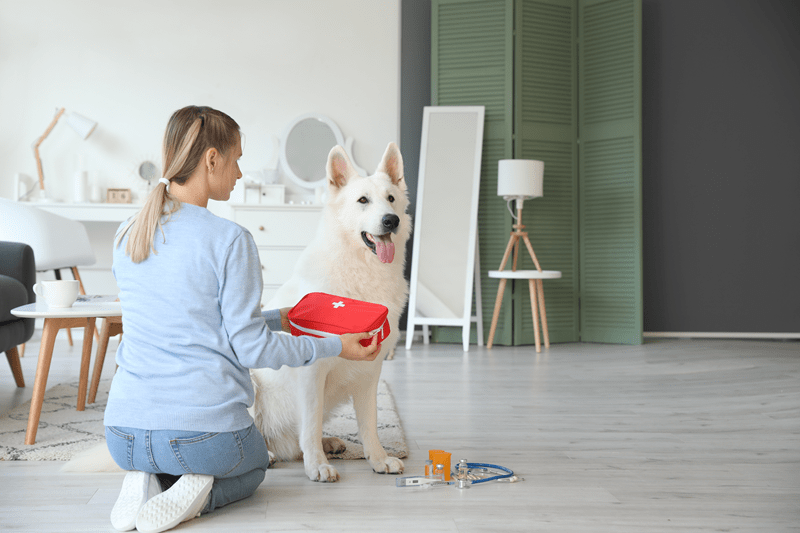
A well-prepared kit includes medication that vets usually recommend for emergencies. You can ask your vet about basic prescriptions to store safely:
These items support pet emergency preparedness, but they must always be used carefully. Human medications are not pet friendly. So always get your vet’s approval first.
Once you’ve collected everything, the next step is simple: storage. Your kit should be easy to reach, protected from heat, and organised. A waterproof box or travel bag works beautifully. Some pet parents keep two versions: one at home, one in the car. That way, hiking trips, visits to the park, and road journeys stay safe too.
Keep the kit updated. Replace expired medicines. Restock bandages after every use. And always keep a checklist inside to stay organised.
Sometimes the first aid kit isn’t enough. Some emergencies need instant vet help. Here’s when you shouldn’t wait:
In these moments, your kit helps stabilise your pet. But you must go straight to the vet after that. Don’t delay.
A kit is great. But training is even better. Learning basic first aid for pets helps you understand what to do during stressful situations. Many pet organisations offer short classes. Some vets teach basics during appointments. And online resources provide visual guides for handling emergencies.
When you know how to use your tools, the kit becomes more than storage. It becomes empowerment.
Traveling with pets? You’ll need a lighter version of your kit. Small, but still effective. Include:
This little kit is perfect for hikes, trips to the beach, or even long car journeys. Think of it as your portable lifeline.
Dogs and cats react to our emotions. If you panic, they panic. So breathe. Slow. Clear. Even if your hands shake a bit. Try speaking softly. Touch them gently. Reassure them. It helps more than you realise.
With your pet first aid kit beside you, everything feels easier. You have the tools. You have the plan. You’re not alone in the moment.
No two pets are the same. A senior dog may need joint supplements and extra medical documents. A cat with asthma may need specific inhalers. A dog prone to allergies may need an additional antihistamine approved by your vet.
Customising your emergency pet supplies makes your kit truly useful, not just something pretty on a shelf.
Check it every three months. Replace expired medicines, refill treats, and ensure all tools still work properly.
No. Many human medications are toxic to pets. Always ask a vet before adding any medicine to your kit.
Absolutely. Emergencies can happen at home too, including burns, cuts, choking, or allergic reactions.
This content was created by AI